Weather and Track Conditions: Betting Adjustments for the Derby
Best Greyhound Betting Sites – Bet on Greyhounds in 2026
Loading...
Conditions Change the Equation
Weather changes the Derby differently than you’d expect. Most punters study form, assess the draw, evaluate the trainer — and then ignore the weather forecast entirely. That’s a mistake. At Towcester, where the entire racing surface is sand and the track sits exposed within a horse racecourse in rural Northamptonshire, conditions on the night can shift the competitive balance between dogs in ways that form figures alone don’t capture. A dog that looked unbeatable on a fast, dry surface three weeks ago might struggle on a rain-softened track tonight. A closer that couldn’t catch the leaders in round two might find the heavier going brings the field back to it in the quarter-final.
The analytical challenge isn’t understanding that weather affects the track — that’s obvious. The challenge is translating weather information into specific, actionable betting adjustments. Which dogs benefit from rain? Which dogs need fast ground? How much does a wet evening slow the times, and what does that do to the relative chances of front-runners versus closers? These are the questions that separate punters who check the forecast from punters who actually use it.
How Weather Affects the Sand Surface
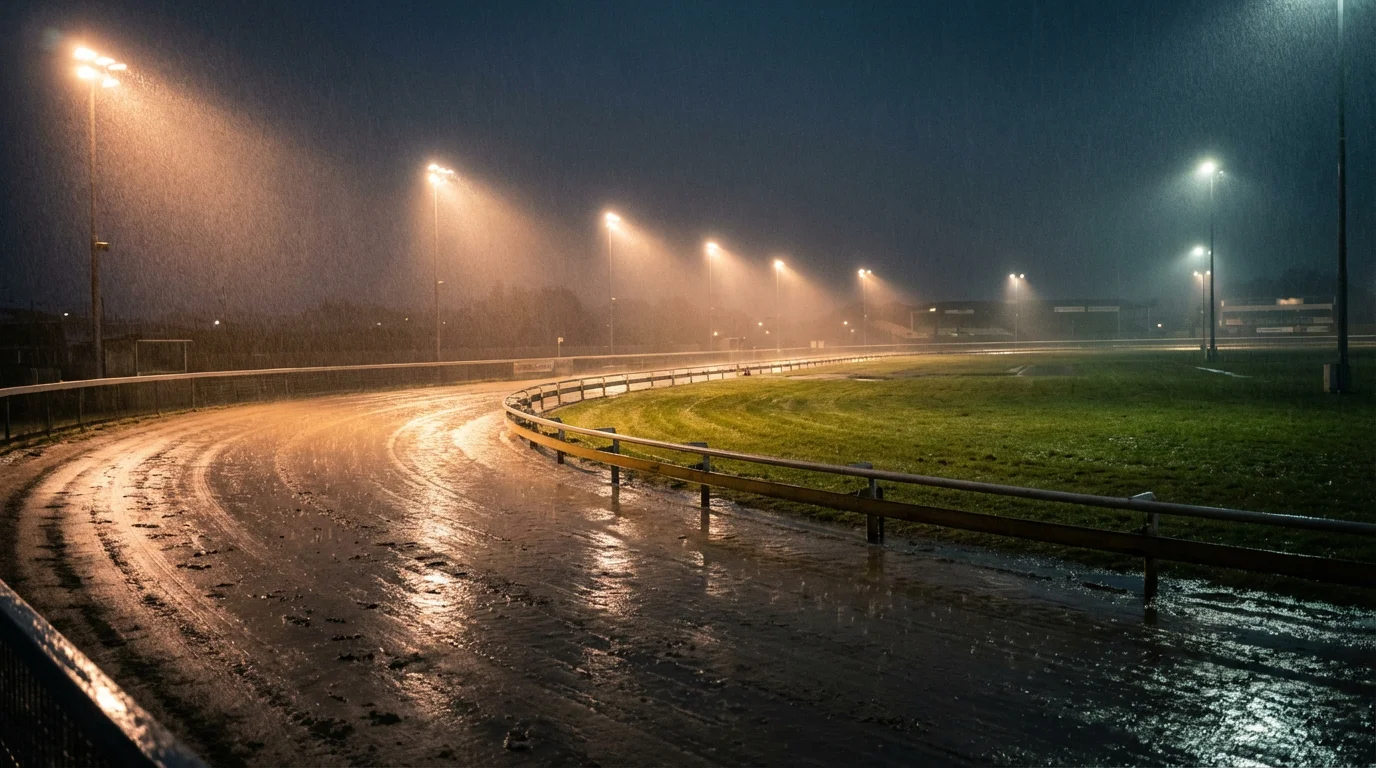
Rain is the most impactful weather variable at Towcester. Wet sand absorbs water and becomes heavier, denser, and more energy-sapping for the dogs running on it. The effect is measurable: race times on a rain-affected evening typically run two to four tenths of a second slower than on a dry night at the same track. That might sound marginal, but in a six-dog Derby heat where the top three qualify, two tenths of a second can represent a length and a half — easily the difference between qualifying and elimination.
The weight of the surface in wet conditions disproportionately affects dogs that expend maximum energy early. Front-runners that blaze through the first 200 metres carry the highest physical cost, and when the surface is heavy, that cost compounds through the third and fourth bends. Dogs that conserve energy in the early stages — closers and mid-pack runners — face a lower cumulative burden and arrive at the closing stages with relatively more in reserve. This doesn’t mean closers always win in the rain. But it does mean the probability distribution shifts in their favour, and the market doesn’t always adjust quickly enough.
Dry, warm conditions produce the opposite effect. The sand firms, times quicken, and front-runners are rewarded for their early pace because the surface returns energy efficiently rather than absorbing it. On a fast, dry Towcester evening in May or June, the dog that reaches the first bend in front has a structural advantage that’s difficult to overcome. The surface lets it sustain its speed through the turns, and the dogs chasing behind it face the dual challenge of making up ground on a dog that isn’t slowing down.
Temperature and humidity interact with rainfall to determine the surface’s actual state. A heavy shower followed by warm sunshine an hour before racing may produce a track that’s drying rapidly and behaving differently in the first race compared to the sixth. A persistent drizzle throughout the evening keeps the surface consistently wet and heavy. Checking the forecast isn’t enough — checking the timing and persistence of any precipitation gives you a more accurate picture of conditions at race time.
Wind is Towcester’s hidden variable. The track’s exposed position means that strong winds — particularly headwinds on the back straight — can affect race dynamics independently of the surface. A headwind slows the pace of the race overall but particularly penalises lighter, leggier dogs that rely on stride efficiency. Heavier, more powerful dogs tend to handle wind better because their physical build is less affected by air resistance. Wind data isn’t published on racecards, but checking the forecast for Towcester’s postcode (NN12) before a round night gives you the information you need.
Factoring Conditions into Your Selections
The practical application starts with categorising your selections by running style and physical profile. Before each Derby round night, review the weather forecast and ask: does tonight’s expected going suit my selections? A front-runner you’ve backed ante-post at 8/1 might be facing rain-softened ground that historically favours closers. That doesn’t mean you abandon the selection — it means you recognise the conditions as a negative factor and adjust your confidence accordingly. You might reduce your heat stake, hold off on additional bets on the dog, or look for hedging opportunities if the market hasn’t adjusted to the conditions.
Weight data from the racecard provides a proxy for how dogs handle different conditions. Heavier dogs — those in the 32 to 36 kg range — tend to cope better with soft, wet sand because their body mass distributes the impact of the heavier surface. Lighter dogs in the 26 to 30 kg range may be quicker on fast ground but more susceptible to the drag of wet conditions. This isn’t an absolute rule — plenty of lighter dogs are effective on soft going — but it’s a useful starting heuristic when conditions are forecast to be heavy.
Cross-referencing a dog’s previous performances with the going on those nights is the most reliable analytical method. If you can access historical weather data for Towcester or track condition notes from previous meetings, you can build a picture of how each Derby contender performs in different conditions. A dog that posted its fastest time on a wet evening is demonstrably comfortable on heavy going. A dog whose best form has all come on dry, fast nights may be vulnerable if rain arrives on a key round.
Intra-evening adjustments are possible but require attention. If the first two races on a Derby round night run slower than expected — suggesting the track is riding heavier than the racecard times implied — you have live information that the later heats will be affected. Adjusting your selections for heats scheduled later in the evening based on what you’re observing in the early races is a real-time analytical edge. It requires watching the card from the start, not just the heats you’ve bet on.
One often-overlooked factor is how surface conditions affect the draw. On fast, dry ground, the inside traps (1 and 2) hold a slight advantage because the shorter path around bends is most valuable when the surface is quick and leaders maintain speed. On heavy ground, the advantage shifts toward the middle traps (2, 3, and 4), which offer the best balance between path length and the ability to avoid crowding on the inside rail where the surface may be most heavily affected by traffic from earlier races. Outer traps (5 and 6) can become relatively less disadvantaged on heavy going, because the slower overall pace gives wide-drawn dogs more time to find their position.
Reading the Sky Before Reading the Card
Weather is the variable most bettors ignore and the one that can deliver the most surprising shifts in competitive balance. A Derby heat run on a rain-soaked evening is a different race from the same heat run on fast, dry sand — even with identical dogs, identical draws, and identical form. The smart money checks the forecast before checking the racecard, because the forecast tells you which form to trust and which to discount.
On dry nights, trust the speed figures. On wet nights, trust the stamina profiles. And on nights where the weather changes during the card, trust your eyes — watch how the early races develop, note the times, and adjust your assessment before the Derby heats begin. Conditions are not background noise. They’re data. Use them.