
Exchange Betting on Greyhound Racing
 Available in US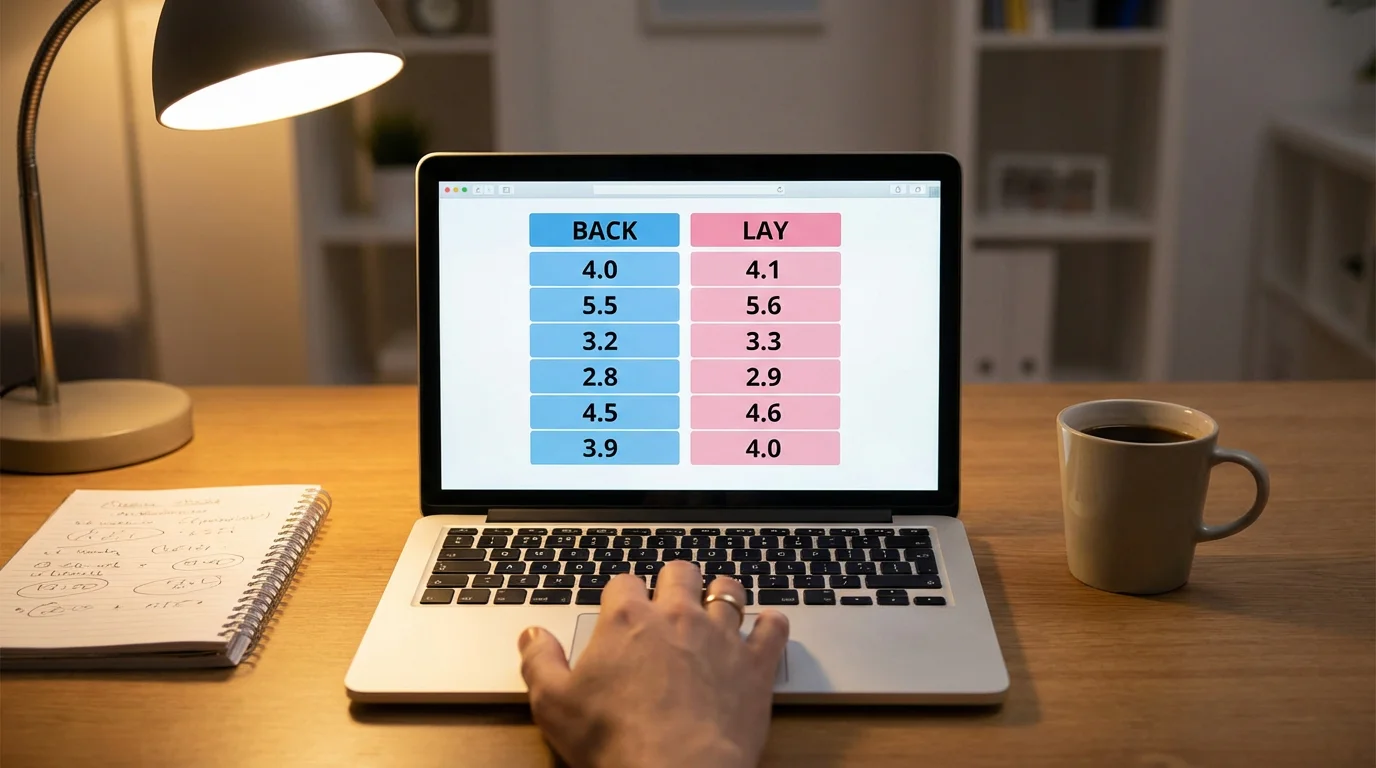
Betting Against Each Other, Not the Bookmaker
On an exchange, you’re not betting against a bookmaker. You’re betting against everyone else. Betting exchanges — of which Betfair is by far the largest in the UK — operate as a marketplace where punters trade bets with each other rather than accepting prices set by a bookmaker. You can back a dog to win (just as you would with a traditional bookmaker) or you can lay a dog — effectively betting that it won’t win. This dual functionality opens up possibilities that simply don’t exist in the fixed-odds market, and for Derby bettors, it adds strategic dimensions that can transform how you approach the competition.
The exchange model offers two structural advantages over traditional bookmakers. First, the prices are typically better. Because exchange odds are set by market participants competing with each other rather than by a bookmaker building in a margin, the effective overround on an exchange market is lower — often significantly so. You get more for your money on each bet. Second, the ability to lay gives you tools that the fixed-odds market can’t provide: you can bet against a dog, trade positions for guaranteed profits, and manage risk across a multi-week competition in ways that are impossible with a traditional bookmaker.
Compare with tote betting in tote betting.
How Exchange Betting Works
The fundamental mechanic is matching. When you place a back bet on an exchange — say, £10 on a dog at 5.0 (4/1 in fractional terms) — your bet isn’t accepted by the exchange itself. It sits in the market as an offer until another user places a matching lay bet at the same price. Once matched, your £10 back bet is paired with a lay bet that covers the opposite outcome. If the dog wins, the layer pays you £40 profit. If it loses, the backer (you) loses £10 to the layer. The exchange charges a commission on winning bets — typically 5% — which is how it generates revenue.
Laying is the exchange’s distinctive feature. When you lay a dog at 5.0, you’re offering to pay 4/1 to anyone who wants to back it. Your liability is the potential payout: if the dog wins, you owe £40 per £10 matched (the backer’s profit). If it loses, you keep the backer’s £10 stake minus the exchange commission. Laying is essentially the same as being the bookmaker for that specific selection. You’re accepting risk in exchange for the probability that the dog doesn’t win — which, in a six-dog race, is the more likely outcome for any individual runner.
The exchange displays two prices for each dog: the back price (the best price currently available if you want to back) and the lay price (the best price currently available if you want to lay). The gap between these two prices — the spread — represents the market’s current uncertainty. A tight spread (e.g., 4.8 to back, 5.0 to lay) indicates a liquid, actively traded market. A wide spread (e.g., 4.0 to back, 6.0 to lay) indicates thin liquidity and less certainty about the true price.
Liquidity is the exchange’s Achilles heel for greyhound racing. While horse racing markets on Betfair are deep and actively traded, greyhound markets carry significantly less liquidity. A typical Derby heat might have £2,000 to £5,000 matched across all runners. The Derby final will attract considerably more — potentially £50,000 or above — but even this is modest compared to a horse racing equivalent like the Cheltenham Gold Cup. Low liquidity means your bets may not be matched at the price you want, and large stakes can move the market against you. For greyhound exchange betting, patience with stake placement and realistic expectations about matching are essential.
Exchange Strategies for the Derby
Trading ante-post positions is where exchange betting adds the most value to a Derby campaign. If you back a dog at 20.0 (19/1) on the exchange ante-post and it progresses to the semi-final at a price of 6.0 (5/1), you can lay it at 6.0 to lock in a guaranteed profit regardless of the final result. The mathematics works as follows: your original back stake of £10 at 20.0 gives you a potential return of £200. Laying the dog at 6.0 for approximately £33 means you pay out £165 if it wins (but still collect £200 from your back bet, netting £35 profit) and collect £33 if it loses (against your £10 back loss, netting £23 profit). This process — called green-booking or greening up — converts a speculative ante-post position into a guaranteed return.
The Derby’s round-by-round format makes green-booking particularly effective. Each round that your selection survives shortens its price, creating incremental trading opportunities. You can green up partially after each round — locking in a small profit at each stage while maintaining some exposure to the eventual outcome — or hold your full position until the price has shortened enough to justify a complete trade. The key is monitoring how the exchange price evolves as the competition progresses and having the discipline to trade at the right moment rather than hoping the price will shorten further.
Laying favourites in individual heats is another exchange-specific strategy. If your analysis suggests that a heat favourite is vulnerable — poor draw, mismatch with running style, fatigue in the later rounds — you can lay it at short odds and profit if any of the other five dogs beats it. The risk is limited to the lay liability (the potential payout if the favourite wins), and the probability is on your side: the favourite loses more often than it wins, even at short prices. Over multiple Derby round nights, selectively laying vulnerable favourites can produce a steady, if unspectacular, return.
In-play exchange trading on greyhound races is theoretically possible but practically challenging. A 29-second race leaves almost no time for analysis, execution, and matching. In-play exchange liquidity on greyhound races is thin, and the latency between live action and your screen means the market has usually moved before you can act. For most punters, pre-race exchange positions — backed or laid before the traps open — are the realistic and productive approach. In-play trading should be reserved for specific, pre-planned scenarios rather than reactive decisions made during the race.
Both Sides of the Market
Exchange betting isn’t a replacement for fixed-odds betting. It’s an extension of it. The best Derby bettors use both markets — fixed odds for selections where the bookmaker’s price is competitive and BOG applies, and the exchange for laying, trading, and accessing better prices on longer-odds selections. The exchange is also the only market where you can actively manage your positions across the six weeks of the Derby, adjusting your exposure as new information emerges from each round.
Open a Betfair account before the Derby starts if you don’t already have one. Familiarise yourself with the back and lay mechanics using small stakes on standard greyhound meetings. Then, when the Derby arrives, you’ll have the tools — and the confidence — to trade positions, lay vulnerable favourites, and green up ante-post bets as the competition unfolds. The exchange gives you both sides of the market. Learning to use both is the edge.
Explore exchange betting on the greyhoundderbybetting homepage.
