Greyhound Derby Trainer Records and Statistics
 Available in US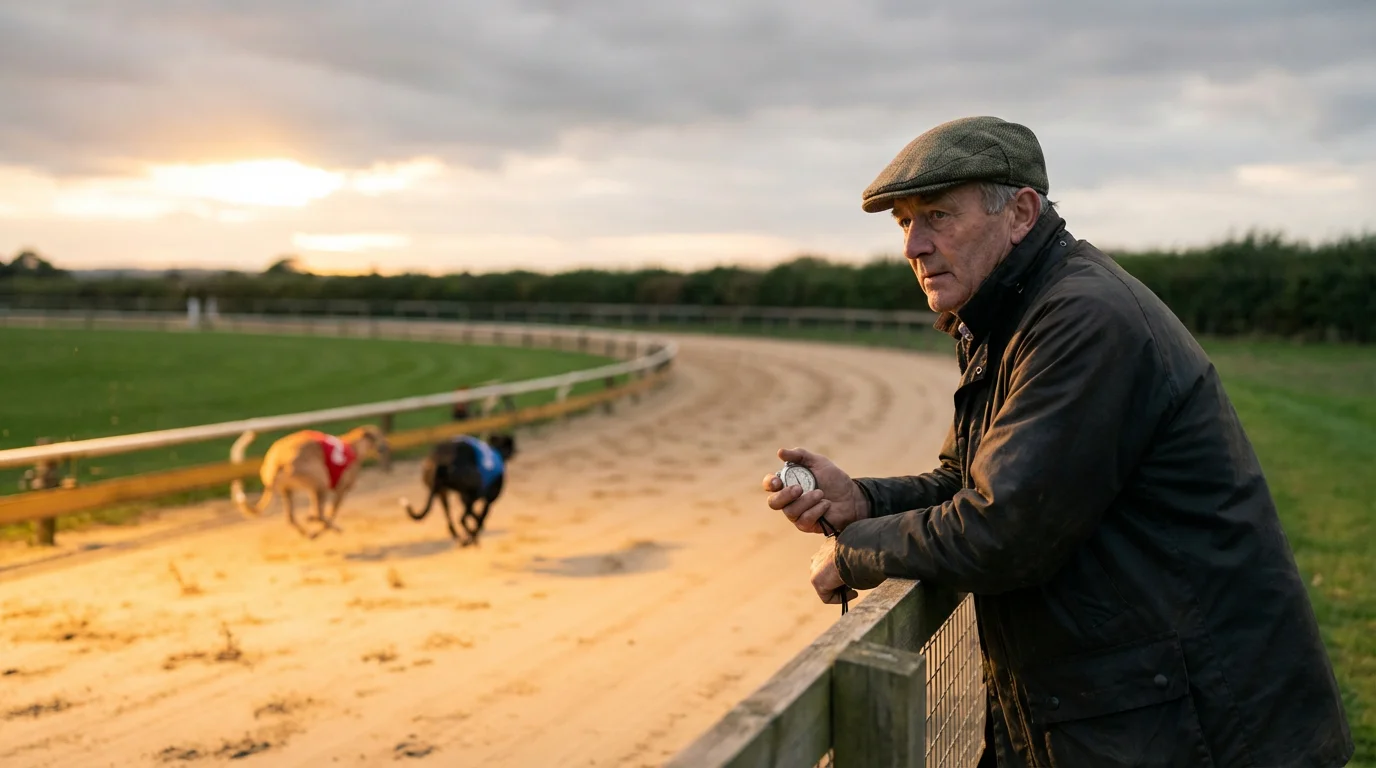
The Trainers Who Shaped the Derby
Behind every Derby winner stands a trainer who got six weeks exactly right. The English Greyhound Derby is won on the track, but it’s prepared in the kennel. The trainer’s decisions — which dogs to enter, how to manage their racing schedule in the months before the competition, when to trial at Towcester, how to adjust feeding, rest and training across six rounds of knockout racing — are the invisible machinery that turns talent into a Derby champion. Some trainers have mastered this process once and never repeated it. A select few have done it repeatedly, building records that define eras and shape the betting market every time the competition comes around.
Trainer form is a consistently overlooked factor in Derby betting. The market prices individual dogs based on recent form, times, and draw. It’s less efficient at pricing the trainer behind the dog — their historical record in the specific competition, their ability to manage a multi-round campaign, their experience of peaking a greyhound for the biggest nights. Two dogs with identical form and similar times can represent very different propositions if one is trained by a seven-time Derby winner and the other by a handler entering the competition for the first time.
Combine trainer data with form figures in form figures work.
The Record Holders
Charlie Lister stands alone at the top. His seven English Greyhound Derby victories — Some Picture (1997), Rapid Ranger (2000 and 2001), Farloe Verdict (2003), Bandicoot Tipoki (2010), Taylors Sky (2011), and Sidaz Jack (2013) — constitute the most dominant training record in the history of the competition. Lister’s victories spanned sixteen years, covering the Wimbledon era and the transition to modern greyhound racing. His approach was characterised by meticulous preparation, an ability to identify talent in unfinished dogs, and a deep understanding of what the Derby format demands. Rapid Ranger arrived at Lister’s Newark kennels as an unremarkable puppy and left as a dual champion. Taylors Sky broke the Wimbledon track record in his final. Lister’s nickname — the Derby King — wasn’t bestowed lightly. He earned it across nearly two decades of sustained excellence in the sport’s most demanding competition. Lister retired from training in 2018, and his record of seven wins may never be surpassed.
Nick Savva compiled four Derby victories as a trainer-owner combination: Toms The Best (1998), Westmead Hawk (2005 and 2006), and Westmead Lord (2007). Savva’s record is remarkable not just for its volume but for its quality. Toms The Best remains the only greyhound to have won both the English and Irish Derby. Westmead Hawk is arguably the most popular Derby champion of all time, a come-from-behind specialist who won the public’s affection with his dramatic finishes. Three consecutive Derby finals (2005, 2006, 2007) produced three Savva-trained winners — a run of dominance that no other trainer has matched in the modern era.
Graham Holland became the first trainer to win back-to-back English Derbies since Lister when Romeo Magico (2022) and Gaytime Nemo (2023) both triumphed at Towcester. Holland, who operates Riverside Kennels in Tipperary, is primarily associated with the Irish Derby — where he holds the record with five wins — but his English Derby victories confirmed his status as the dominant force in modern greyhound training on either side of the Irish Sea. Holland’s approach is distinctive: he campaigns large teams across both Derbies, typically entering six to eight dogs in the English competition, ensuring he has multiple chances to find a finalist. That strategy requires depth of talent, but it also reflects a training operation capable of preparing and managing numerous elite dogs simultaneously.
Patrick Janssens has two English Derby wins: Thorn Falcon (2021) and Droopys Plunge (2025). Belgian-born but based in Towcester, Janssens benefits from having his dogs trained on the same track where the Derby is run — a logistical advantage that no Irish or London-based trainer can replicate. His 2021 victory with Thorn Falcon marked the Derby’s return to Towcester after the Nottingham interlude, and his 2025 win with Droopys Plunge at 10/1 was one of the competition’s more surprising results in recent years.
Paul Hennessy holds two English Derby victories: Jaytee Jet (2016, the last Wimbledon Derby) and Priceless Blake (2019, at Nottingham). Hennessy, based in Waterford, had previously won the Irish and Scottish Derbies, and his English victories completed a full set of national Derby titles — a feat only a handful of trainers have achieved. His ability to prepare dogs for tracks they rarely race at — Wimbledon for Jaytee Jet, Nottingham for Priceless Blake — speaks to a training method that prioritises adaptability and temperament alongside raw speed.
In the historical record, Leslie Reynolds deserves mention. His five Derby wins came between 1948 and 1954, an era when the competition was staged at White City and the sport drew attendances that rivalled football. Reynolds trained Priceless Border (1948), Narrogar Ann (1949), and Endless Gossip (1952) among others — a dynasty built on a breeding programme that produced multiple Derby champions from related bloodlines.
How Trainer Form Translates to a Betting Edge
The relationship between trainer record and Derby betting value operates on several levels. The most straightforward is confidence weighting. When Charlie Lister entered a dog in the Derby, his seven-win record meant the market took it seriously regardless of headline form. That was often justified — Lister’s Derby entries tended to arrive in peak condition because he understood the preparation process better than anyone. But it also created opportunities when the market overpriced a Lister runner that was past its best, or underpriced a first-time Derby entry from a less fashionable kennel.
Multi-entry strategies are a significant factor for modern bettors to consider. Holland’s approach of entering large teams means that his strongest dog may not be the one the market identifies as the kennel’s leading contender. In 2022, Romeo Magico wasn’t the most fancied Holland runner entering the competition. In 2023, Gaytime Nemo was well-regarded but not the outright market leader from the yard. Tracking which dog within a multi-entry kennel is performing best — through trial times, early-round performances, and weight data — can identify the trainer’s real Derby contender before the market adjusts.
Kennel form across rounds is another analytical tool. A trainer whose dogs consistently improve their times from round one to round three is likely managing the preparation cycle well. A kennel whose dogs peak in round one and decline thereafter may be bringing them to the Derby too sharp — fast but fragile. By the quarter-final stage, you can assess kennel-wide trends: are the trainer’s surviving dogs running faster or slower than in the opening rounds? Are they maintaining weight? Are they qualifying comfortably or scraping through? These kennel-level patterns can be more informative than individual dog form, particularly when the trainer has multiple runners in the competition.
The trainer’s track record at Towcester specifically — not just in the Derby but across regular meetings — provides another layer of insight. Janssens benefits from training at Towcester full-time, which means his dogs are familiar with the surface and the bends before the first round. Irish trainers must trial their dogs at the track in advance, and the quality and timing of those trials can signal how seriously they’re targeting the Derby. A trainer who sends a team of six to trial at Towcester in early May is investing significant time and money in preparation. A trainer who trials a single dog a week before round one is either supremely confident or treating the Derby as a secondary target.
Names That Matter
The Derby has been won by trainers from every background — full-time professionals, hobby trainers, private handlers, Irish raiders, British stalwarts. But the names that recur — Lister, Savva, Holland, Janssens, Hennessy — share a common trait: they understand the Derby as a distinct competition that demands specific preparation. They don’t just enter their best dog and hope. They plan, they prepare, and they peak their charges for the six weeks that matter most.
When the next Derby entries are published, look at the trainers first and the dogs second. The name on the kennel can tell you as much as the name on the racecard.
Research trainer records on the greyhoundderbybetting homepage.
