Greyhound Derby Prize Money and Purse Breakdown
 Available in US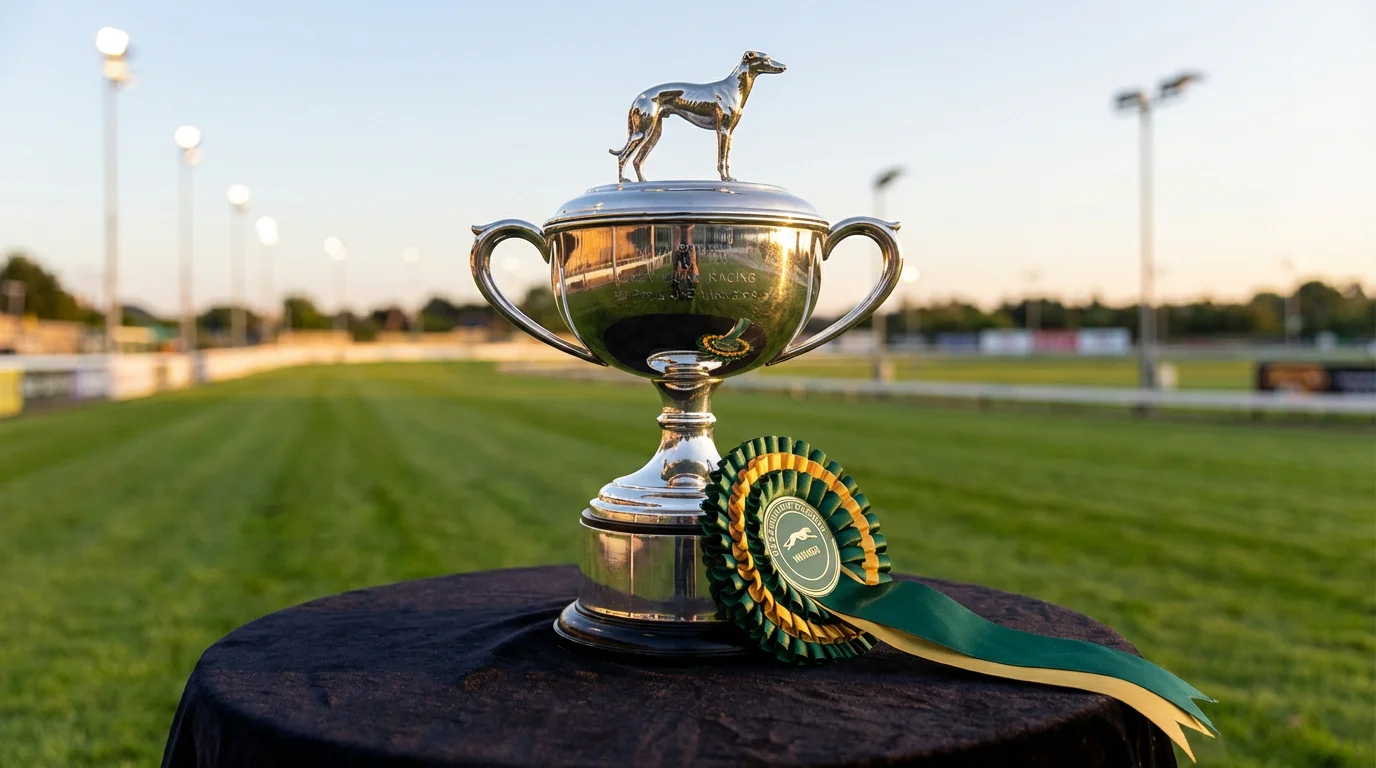
The Richest Prize in British Greyhound Racing
£175,000 to the winner. That figure tells you everything about where the Derby sits in the hierarchy of British greyhound racing. No other competition comes close. The English Greyhound Derby offers the largest winner’s prize in the sport, dwarfing the rewards available at any other domestic meeting, and its purse structure reflects both the competition’s prestige and its central importance to the commercial health of the industry. For trainers, owners, and breeders, the Derby isn’t just a title — it’s a career-defining payday.
For bettors, the prize money carries a different kind of relevance. The size of the purse dictates the quality of the field. A £175,000 first prize attracts the best dogs from both Britain and Ireland, ensuring that the Derby is a genuine championship rather than a regional event. It also influences trainer behaviour — dogs are specifically prepared for the Derby, campaigns are planned around it, and decisions about rest, racing, and peak timing are driven by the prize on offer. Understanding the financial stakes helps you understand why certain trainers approach the competition the way they do, and why the standard of the field is consistently higher than at any other domestic event.
The prize money has changed dramatically over the Derby’s near-century history, and the journey from the first winner’s cheque in 1927 to today’s six-figure payout mirrors the broader evolution of the sport’s commercial model.
See how prize money relates to the Derby format in derby format.
Prize Money Through the Decades
The first English Greyhound Derby was run at White City in 1927, and the winner, Entry Badge, collected a prize of £1,000. In the context of the late 1920s that was a substantial sum — roughly equivalent to the price of a modest house — but it was modest compared to the horse racing purses of the era. Greyhound racing was still establishing itself as a mainstream sport, and the Derby’s financial rewards reflected that early stage of development.
Through the 1930s and 1940s, prize money grew steadily but unspectacularly, limited by wartime constraints and a sport that, while enormously popular in attendance terms, had not yet developed the commercial structures to support large purses. The Derby was suspended entirely between 1941 and 1944. When it resumed, the winner’s prize remained in the low thousands.
The post-war decades brought gradual growth. By the 1960s, the winner’s cheque had risen into the low five figures, and the arrival of sponsorship in the 1970s transformed the financial landscape. Spillers became the first major sponsor in 1973, the same year Patricias Hope completed a famous back-to-back win. Sponsorship money allowed the prize fund to escalate significantly. By 1980, the winner was receiving £35,000 — a substantial reward that placed the Derby firmly alongside the most prestigious events in British racing of any code.
The Daily Mirror took over sponsorship in 1983, and William Hill became the title sponsor from 1998. Each change of sponsor brought an uplift in prize money, reflecting the increasing commercial value of the event to bookmakers and media companies. The move from White City to Wimbledon in 1985 coincided with a period of commercial growth for the sport, and the Derby’s prize fund continued to climb. By the early 2000s, the winner was collecting upwards of £100,000.
The modern era has brought further increases. The current winner’s prize of £175,000 was established when the Derby moved to Towcester and Star Sports became the sponsor alongside TRC Events. This figure has been maintained through consecutive renewals, providing a degree of financial certainty that helps trainers and owners plan their Derby campaigns with confidence. The total purse — covering prizes from first through sixth place plus consolation awards — exceeds £300,000 in aggregate, making the Derby by far the richest single event in the British greyhound calendar.
Purse Breakdown by Position
The winner’s £175,000 headline figure captures the attention, but the purse structure extends well beyond the champion. The Derby distributes prize money to all six finalists, with a sliding scale that rewards reaching the final even if you don’t win it. This structure incentivises participation at the highest level and ensures that connections of the runner-up and third-placed dog receive a meaningful return on the investment of campaigning a greyhound through six weeks of competition.
While the exact breakdown can vary slightly between years depending on sponsorship terms, the typical distribution for recent Derby finals has followed a sliding scale where the runner-up and third-placed dog receive meaningful but significantly smaller sums. Fourth, fifth, and sixth places each receive progressively smaller amounts, but even the last-placed finalist typically collects a prize that reflects the prestige of reaching the final. For a dog that entered the competition six weeks earlier as one of 180 hopefuls, reaching the final and finishing last still represents a significant financial reward.
Beyond the final, the Derby distributes consolation prizes throughout the earlier rounds. Heat winners and qualifiers in each round receive appearance fees and prize money, though these are modest compared to the final-night rewards. The structure means that a trainer running multiple dogs through the competition can generate meaningful income from round-by-round participation, even if none of their entries reach the final. For larger kennels — particularly the Irish operations that send teams of six or eight dogs — the cumulative round-by-round income partially offsets the cost of travel, accommodation, and campaign management.
There is also a British-bred bonus, currently worth £2,000, awarded to the British-bred greyhound that progresses furthest in the competition. Given the dominance of Irish-bred dogs in recent Derby renewals, this bonus is specifically designed to encourage domestic breeding programmes and to ensure British-bred entries have an additional incentive to participate at the highest level.
Beyond the Cheque
The Derby winner’s prize money is the headline figure, but the financial impact of winning extends well beyond the cheque. A Derby champion’s breeding value increases dramatically overnight. Stud fees for proven Derby winners — and particularly for dogs with strong sire lines — can generate income for years after the dog’s racing career ends. Westmead Hawk, the dual Derby winner in 2005 and 2006, went on to sire subsequent Derby winners including Taylors Sky and Sidaz Jack, extending his financial legacy well into the next decade.
For trainers, a Derby victory cements reputation and attracts future business. Charlie Lister’s record seven Derby wins established him as the undisputed king of the competition, and his Derby record was central to his status as Britain’s most sought-after trainer for decades. Modern trainers like Patrick Janssens and Graham Holland have seen their profiles — and presumably their fee structures — elevated by Derby success. The competition functions as a showcase, and the winner’s prize is just the beginning of the commercial return.
For the sport as a whole, the Derby’s prize fund serves a structural purpose. It’s the financial anchor that justifies the investment in breeding, training, and campaigning greyhounds at the elite level. Without a prize of this magnitude, the incentive for Irish and British operations to prepare dogs specifically for a six-week summer tournament would be diminished, and the quality of the field would suffer accordingly. The £175,000 isn’t just a number. It’s the mechanism that ensures the English Greyhound Derby remains, year after year, the standard against which every other greyhound competition in the world is measured.
Read about Derby prize money on the greyhoundderbybetting homepage.
